

Editorial
Take a closer look at the world of luxury watchmaking and you’ll soon discover a venerable craft shaped by centuries of tradition. Many prestigious manufacturers boast remarkably rich histories, each rooted in a legacy of innovation and craftsmanship. But do you know which watch brands are the oldest—and just how far back their origins truly extend?
The Historical Perspective
The story of timekeeping began more than 5,000 years ago with the invention of sundials. Ancient Egyptian and Sumerian civilizations understood that the shadow cast by a gnomon could accurately indicate the time of day. The Egyptians were also responsible for dividing the day into two twelve-hour periods, while the division of an hour into 60 minutes can be traced back to the astronomers of ancient Babylon, who used a sexagesimal system in which each degree is divided into 60 angular minutes.
As humanity learned to measure time, the pursuit of greater accuracy naturally followed. Alongside major powers such as England and France, Switzerland emerged early as a key player, gradually establishing itself as a center of fine watchmaking. To this day, Swiss watches are synonymous with precision and exceptional quality—making it no surprise that many of the world’s oldest watch brands originate from Switzerland.
Time Travel Through Luxury Watch Manufacturers
10th: Omega – Since 1848
The foundations of today’s Omega were laid in 1848, when Louis Brandt established his company, Louis Brandt & Fils, in La Chaux-de-Fonds. The name “Omega” originates from the highly regarded 19-ligne Omega caliber introduced in 1894, celebrated for its exceptional precision. The brand later relocated to Biel/Bienne, where it gained international recognition through record-setting accuracy, marine chronometers, and its role as the official timekeeper of the 1932 Olympic Games.
Omega’s reputation was further cemented in 1957 with the launch of the Speedmaster, a timepiece that famously accompanied the Apollo 11 astronauts to the Moon in 1969, earning its legendary “Moonwatch” status. Today, as part of the Swatch Group, Omega continues to unite technical innovation—such as the co-axial escapement—with enduring global appeal.
9th: Ulysse Nardin – Since 1846
Ulysse Nardin was established in 1846 in Le Locle by its founder and master watchmaker, Ulysse Nardin. The brand quickly earned an international reputation for producing exceptionally precise marine chronometers, widely used by shipping companies and naval forces.
Following challenging years during the quartz crisis—when the company came close to bankruptcy—Ulysse Nardin was revitalized in the early 1980s by Rolf Schnyder, who partnered with watchmaker Dr. Ludwig Oechslin. Together, they introduced remarkable complications, including the iconic astrolabe.
At the dawn of the 21st century, Ulysse Nardin once again pushed boundaries with the groundbreaking Freak collection, becoming a pioneer in the use of silicon components in watch escapements. Today, the brand seamlessly blends its rich maritime heritage with bold technical innovation.

8th: Patek Philippe – Since 1839
The origins of Patek Philippe date back to 1839, when Antoine Norbert de Patek founded a watchmaking workshop in Geneva together with François Czapek. After Czapek’s departure in 1845, the company welcomed the French watchmaker Jean Adrien Philippe, whose innovations would help shape the brand’s future.
In 1932, Patek Philippe was acquired by the Stern family and has remained in their ownership ever since, making it one of the last independent luxury watch manufacturers in Geneva. Iconic collections such as the Nautilus, Calatrava, and Aquanaut sit atop the wishlists of collectors worldwide, while the Grand Complications exemplify the Maison’s exceptional technical mastery and horological prestige.
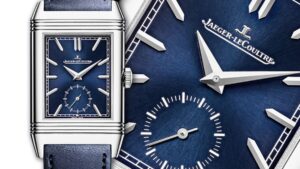
7th: Jaeger-LeCoultre – Since 1833
Jaeger-LeCoultre traces its origins to 1833, when brothers Charles Antoine and François Ulysse LeCoultre founded the manufacture in the Vallée de Joux, a region that soon became synonymous with watchmaking innovation. A major milestone followed in 1844 with the invention of the “Millionomètre,” an ultra-precise measuring instrument that made it possible to manufacture exceptionally fine components.
In 1866, LeCoultre consolidated its production under one roof, giving rise to what became known as the “Grande Maison.” From the early 20th century onward, the manufacture collaborated closely with Parisian watchmaker Edmond Jaeger, a partnership that culminated in the creation of the Jaeger-LeCoultre name in 1937.
Renowned for supplying movements and components to numerous other prestigious brands, Jaeger-LeCoultre has developed more than 1,200 calibers and holds hundreds of patents. For this reason, it continues to be revered as the “watchmaker’s watchmaker.” Since 2000, the brand has been part of the Richemont Group.

6th: Longines – Since 1832
In 1832, Auguste Agassiz, together with Henri Raiguel and Florian Morel, founded the Agassiz & Co. workshop in Saint-Imier. In 1854, Ernest Francillon—Agassiz’s nephew—assumed leadership of the company and soon became a pioneer of industrialized watch production in Switzerland. He selected a site known as Les Longines (French for “the long meadows”) for the new factory, a name that would later define the brand.
Although the name Longines was first used in 1867, it was officially registered 22 years later, making Longines the oldest registered watch brand in the world. Its iconic winged hourglass emblem is also the oldest trademark still in continuous use in the watch industry. Today, Longines is renowned for its elegant designs and excellent value for money and operates as part of the Swatch Group.
5th: Baume & Mercier – Since 1830
Baume & Mercier traces its origins to 1830, when brothers Louis-Victor and Célestin Baume founded “Frères Baume” in the Swiss Jura. Throughout the 19th century, the company earned a strong reputation for producing precise, award-winning timepieces.
In 1918, the Baume family partnered with Paul Mercier, leading to the creation of the Baume & Mercier name. After navigating the challenges of the quartz crisis, the brand became part of the Richemont Group in 1988. Today, collections such as the Clifton and Hampton embody Baume & Mercier’s commitment to elegant design, accessible luxury, and dependable watchmaking craftsmanship.
4th: Breguet – Since 1775
Breguet was founded in Paris in 1775 by Abraham-Louis Breguet, a native of Neuchâtel and one of the most influential figures in the history of watchmaking. Widely regarded as a pioneer of modern horology, Breguet was responsible for groundbreaking inventions such as the tourbillon (1801), the Breguet overcoil hairspring, and the pare-chute shock protection system. He also introduced refined guilloché decoration and the instantly recognizable Breguet hands.
The Maison’s prestige is reflected in its illustrious clientele, which included Napoleon Bonaparte, Marie-Antoinette, and Tsar Alexander I. Today, Breguet is part of the Swatch Group and continues to embody technical brilliance and timeless elegance at the highest level of haute horlogerie.

3rd: Vacheron Constantin – Since 1755
Vacheron Constantin traces its origins to 1755, when Jean-Marc Vacheron founded his workshop in Geneva and took on his first apprentice. Remarkably, the manufacture has produced timepieces without interruption ever since, enduring revolutions, wars, and profound social change. From an early stage, Vacheron distinguished itself through refined design and the creation of watches with complex displays and sophisticated complications, earning a reputation for exceptional technical artistry.
In 1819, the Vacheron family partnered with merchant François Constantin, giving rise to the name Vacheron Constantin that endures today. Renowned collections such as Patrimony, Overseas, and Historiques—together with uncompromising craftsmanship—have firmly established the Maison as a member of the Swiss “Holy Trinity” of haute horlogerie.
2nd: Jaquet Droz – Since 1738
Vacheron Constantin traces its origins to 1755, when Jean-Marc Vacheron founded his workshop in Geneva and took on his first apprentice. Remarkably, the manufacture has produced timepieces without interruption ever since, enduring revolutions, wars, and profound social change. From an early stage, Vacheron distinguished itself through refined design and the creation of watches with complex displays and sophisticated complications, earning a reputation for exceptional technical artistry.
In 1819, the Vacheron family partnered with merchant François Constantin, giving rise to the name Vacheron Constantin that endures today. Renowned collections such as Patrimony, Overseas, and Historiques—together with uncompromising craftsmanship—have firmly established the Maison as a member of the Swiss “Holy Trinity” of haute horlogerie.
1st: Blancpain – Since 1735
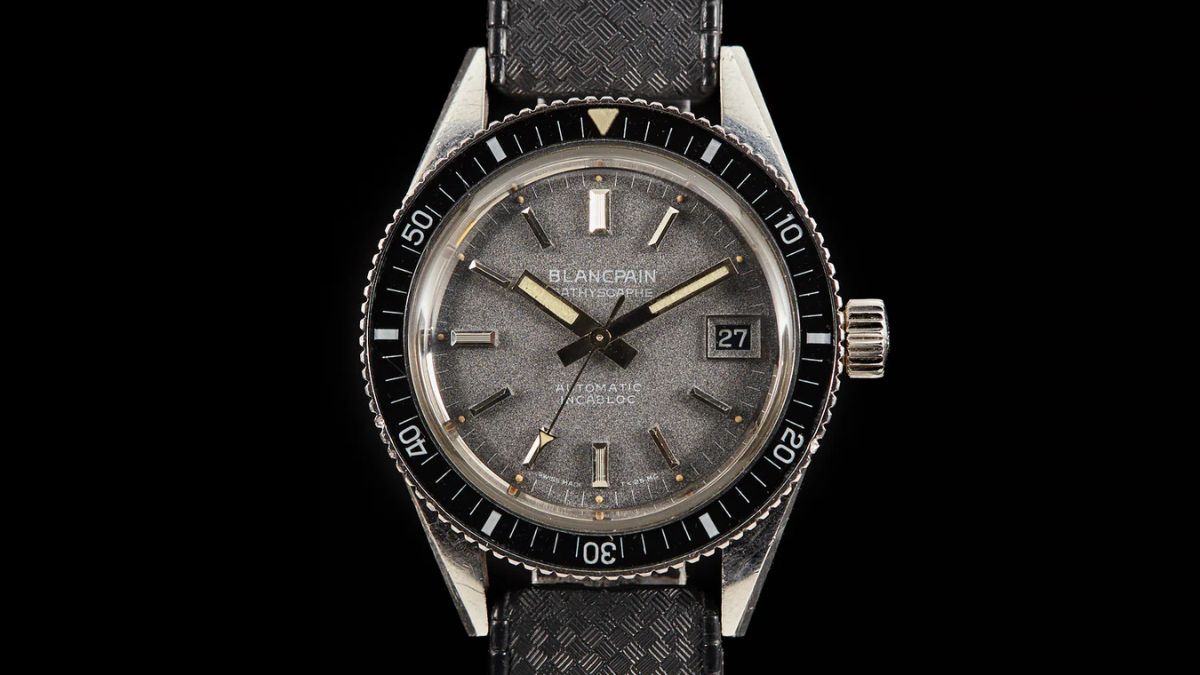
Blancpain’s story began in 1735, when Jehan-Jacques Blancpain opened his workshop on the upper floor of his home, making it the oldest watch brand still in operation today. From the start, the focus was on mechanical precision and exquisite craftsmanship. The brand created one of the earliest icons of diving watches with the Fifty Fathoms and produced one of the most complex wristwatch movements with the Caliber 1735.
Even during the quartz crisis, Blancpain remained committed to mechanical watchmaking, solidifying its reputation as a master of intricate, classic timepieces. Today, the brand represents a blend of traditional horology, modern innovation, and exclusive partnerships, including ventures in motorsport.