

Editorial
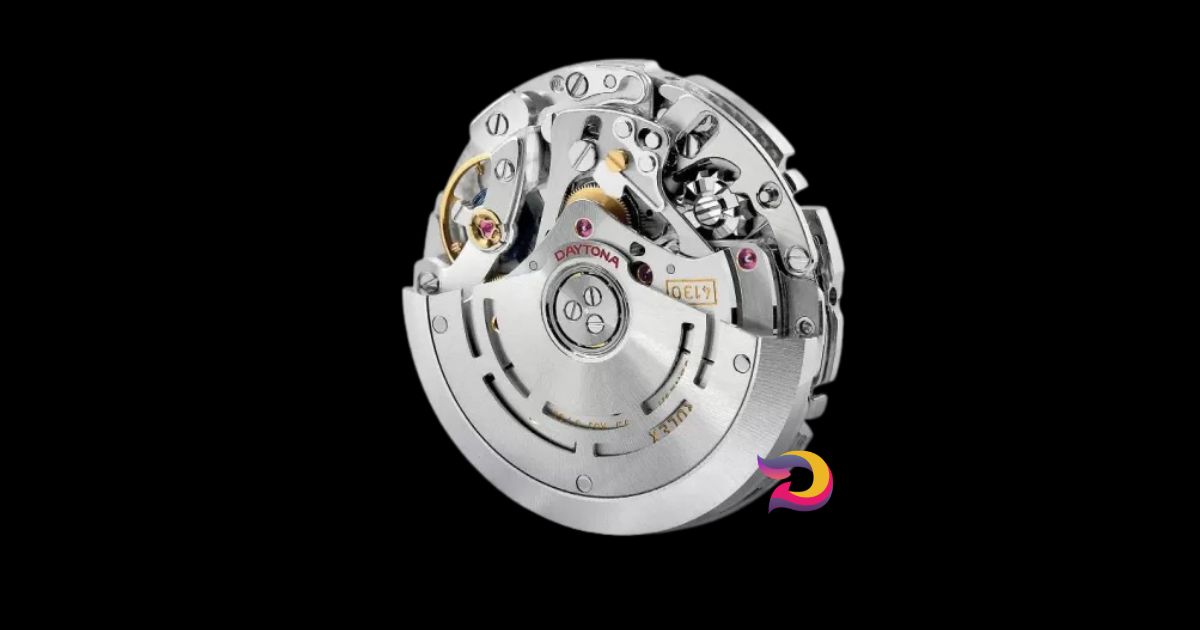
Since its debut in 2000, Rolex Caliber 4130 has stood as one of the modern era’s most influential automatic chronograph movements. Built entirely in‑house by Rolex engineers, the 4130 was developed to elevate precision, reliability, and serviceability in the brand’s flagship chronograph — the Oyster Perpetual Cosmograph Daytona.
Overview and Key Specifications
| Feature | Specification |
|---|---|
| Movement Type | Self‑winding mechanical chronograph |
| Functions | Hours, minutes, small seconds + chronograph |
| Diameter | ~30.5 mm |
| Height | ~6.5 mm |
| Jewels | 44 jewels |
| Beat Rate | 28,800 vph (4 Hz) |
| Power Reserve | ~72 hours |
| Shock Protection | KIF / Paraflex anti‑shock |
| Hairspring | Parachrom blue hairspring |
| Certification | COSC certified chronometer |
This movement represents a significant milestone in Rolex’s watchmaking journey: the first fully integrated automatic chronograph calibre designed and manufactured entirely by Rolex.
Historical Context & Development
Before the 4130, Rolex relied on modified movements — most notably the Zenith El Primero‑based Caliber 4030 — to power its Daytona chronographs. Although robust, the modified El Primero movement had limitations in parts count, maintenance complexity, and power reserve. Rolex set out to build a truly in‑house chronograph that could exceed these constraints.
Unveiled at Baselworld in 2000, the Caliber 4130 was the result of around five years of dedicated development. Rather than adapting an existing calibre, Rolex re‑engineered the chronograph mechanism from the ground up. The result: a movement with roughly 60% fewer components compared to a typical chronograph calibre of its day. This simplification improved reliability and made servicing easier — both paramount concerns for high‑end chronographs.
Technical Features That Set It Apart
1. In‑House Chronograph With Vertical Clutch
One of the standout features of the 4130 is its vertical clutch chronograph engagement. Unlike traditional lateral clutch systems, the vertical clutch ensures a smoother and more precise start and stop of the chronograph seconds hand, virtually eliminating the “jump” associated with lesser designs.
2. Fewer Components, Greater Efficiency
By consolidating separate chronograph modules (as found in older designs) into a more compact architecture, Rolex dramatically reduced the number of individual parts — streamlining assembly and minimizing potential points of failure. The space saved also allowed for easier access during servicing and contributed to an extended power reserve.
3. Enhanced Power Reserve
Traditional automatic chronographs of the 1990s typically offered power reserves in the 40–50 hour range. Thanks to a larger mainspring made possible by the calibre’s simplified architecture, the 4130 delivers roughly a 72‑hour power reserve — a significant improvement for a sport chronograph.
4. Parachrom Blue Hairspring and Shock Resistance
Rolex equipped the 4130 with its patented Parachrom blue hairspring, crafted from a paramagnetic alloy that dramatically improves resistance to magnetic fields and temperature fluctuations. It also boasts greatly enhanced shock resistance compared with conventional hairsprings.
5. COSC Chronometer Certification
As with all Rolex movements, the Caliber 4130 undergoes stringent testing by the Swiss Official Chronometer Testing Institute (COSC) and meets its exacting standards for accuracy and precision.
Watches Featuring the Caliber 4130
From its introduction, the Calibre 4130 became the beating heart of the Rolex Oyster Perpetual Cosmograph Daytona— arguably one of Rolex’s most iconic chronograph models. Over the decades, the movement has powered countless references of the Daytona in steel, gold, and platinum, and remains a pillar of Rolex’s modern chronograph offerings.
Legacy and Impact
More than two decades after its launch, the Caliber 4130 is still widely regarded as one of the best mechanical chronograph movements produced in the 21st century. Its combination of reliability, precision, serviceability, and robust performance has influenced how high‑end chronographs are designed industry‑wide. Today, while newer iterations like the Caliber 4131 bring enhancements such as the Chronergy escapement, the original 4130 remains a benchmark in automatic chronograph engineering.
Conclusion
The Rolex Caliber 4130 isn’t just a movement — it’s a statement of Rolex’s commitment to technical refinement and chronograph mastery. By reimagining what a sport chronograph can be, Rolex elevated the Daytona from a beloved racing watch to a modern horological icon driven by one of the most reliable and efficient movements of its era.