

Editorial
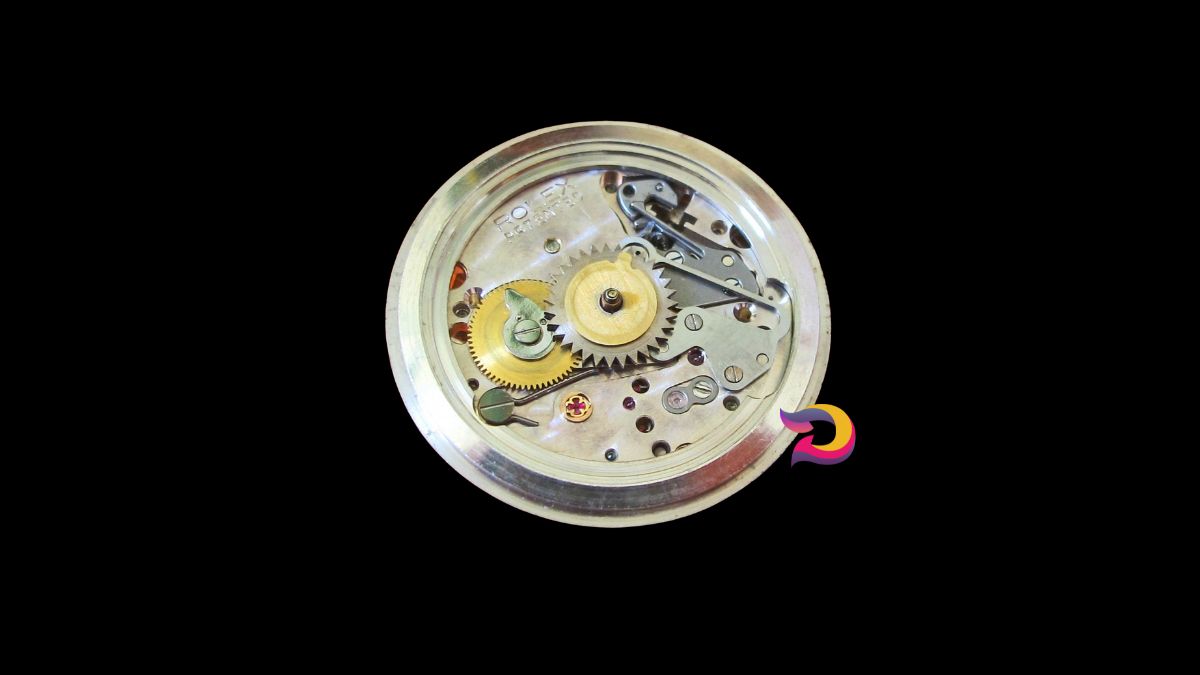
When discussing Rolex’s historic contributions to watchmaking, few movements represent as pivotal a moment as Caliber 1055. Introduced in the mid-1950s, this was not just another automatic movement — it was the heart of the very first Rolex Day-Date, a model that would go on to become one of the most iconic and revered watches in horological history.
Overview & Key Specifications
Here’s a quick overview of the essential technical details of Caliber 1055:
| Feature | Specification |
|---|---|
| Type | Automatic (self-winding) mechanical |
| Functions | Hours, minutes, central seconds, day & date displays |
| Jewels | 25 jewels |
| Frequency | 18,000 vibrations/hour (2.5 Hz) |
| Diameter | 28.50 mm |
| Height | ~7.0 mm |
| Escapement | Swiss lever |
| Shock Protection | Kif anti-shock |
| Certification | COSC chronometer |
Caliber 1055 was part of Rolex’s “10xx” family of movements, building on the robust architecture of its predecessor, Caliber 1030. What set the 1055 apart wasn’t just its precision, but its day and date complication — a mechanical module that was groundbreaking for Rolex and for the wider watch industry.
The Birth of the Day-Date
In 1956, Rolex introduced the Oyster Perpetual Day-Date, later known informally as the “President.” Powered by Caliber 1055, it was the first automatic, chronometer-certified wristwatch to display both the day of the week in full and the date in apertures on the dial.
Before the 1055, most Rolex automatics were simpler in function. The addition of a day display positioned at 12 o’clock (with the date at 3 o’clock) was a novel complication — and one that defined the Day-Date’s identity from the very first reference numbers 6510 and 6511.
Design, Operation & Traits
Caliber 1055 operated at a traditional 18,000 A/h (alternations per hour), a frequency that reflected the watchmaking norms of the era. Its automatic winding employed Rolex’s bi-directional “Perpetual” rotor with distinctive red-anodized reversing wheels — a hallmark of Rolex’s engineering innovation in the 1950s.
The movement’s day and date wheels changed gradually around midnight instead of instantly. This was a characteristic of early calendar mechanisms and would later be optimized in successors such as Caliber 1555/1556, which introduced the now-standard instantaneous date and day change.
While exact power-reserve figures for the 1055 vary depending on source, it traditionally offered robust autonomy typical of Rolex calibers of the time.
Historical Significance & Legacy
Although its production run was relatively short (roughly 1956–1959), the 1055’s impact was outsized. It marked Rolex’s transition into producing more complicated—and more prestigious—watches that went beyond simple timekeeping.
The Day-Date would evolve dramatically over the coming decades, but Caliber 1055 remains the foundation upon which that legacy was built. Every modern Day-Date with faster beats, longer power reserves, or instantaneous complications owes its existence to this early movement.
Which Watches Used Caliber 1055?
This movement was exclusively found in early Rolex Day-Date models, including:
- Rolex Oyster Perpetual Day-Date Ref. 6510
- Rolex Oyster Perpetual Day-Date Ref. 6511
- Other near-contemporary variants such as early 6611/6612/6613 series references.
These watches, built in precious metal cases and finished with elegant bracelets, laid the stylistic groundwork for the Day-Date’s enduring “luxury yet purposeful” character.
Why Collectors Value Caliber 1055 Today
For enthusiasts and collectors, Caliber 1055 is prized not just for its rarity but for its pivotal place in Rolex history. Early Day-Date watches with this caliber are sought after for:
- Historical importance as the movement that launched the Day-Date line
- Vintage character that reflects mid-20th-century watchmaking
- Mechanical charm, with gradual calendar changes and classic chronometer performance — a contrast to today’s instantaneous jumps and high beat rates.
Conclusion
Rolex Caliber 1055 isn’t simply an old movement — it’s a cornerstone of Rolex’s calendar watch heritage. Its design married complexity with reliability in a way that was ahead of its time. While later calibers refined and perfected the day-date functions we know today, the 1055 started it all. For collectors and lovers of mechanical history, it remains a landmark achievement—proof that even icons have humble, ingenious beginnings.