Social

Editorial
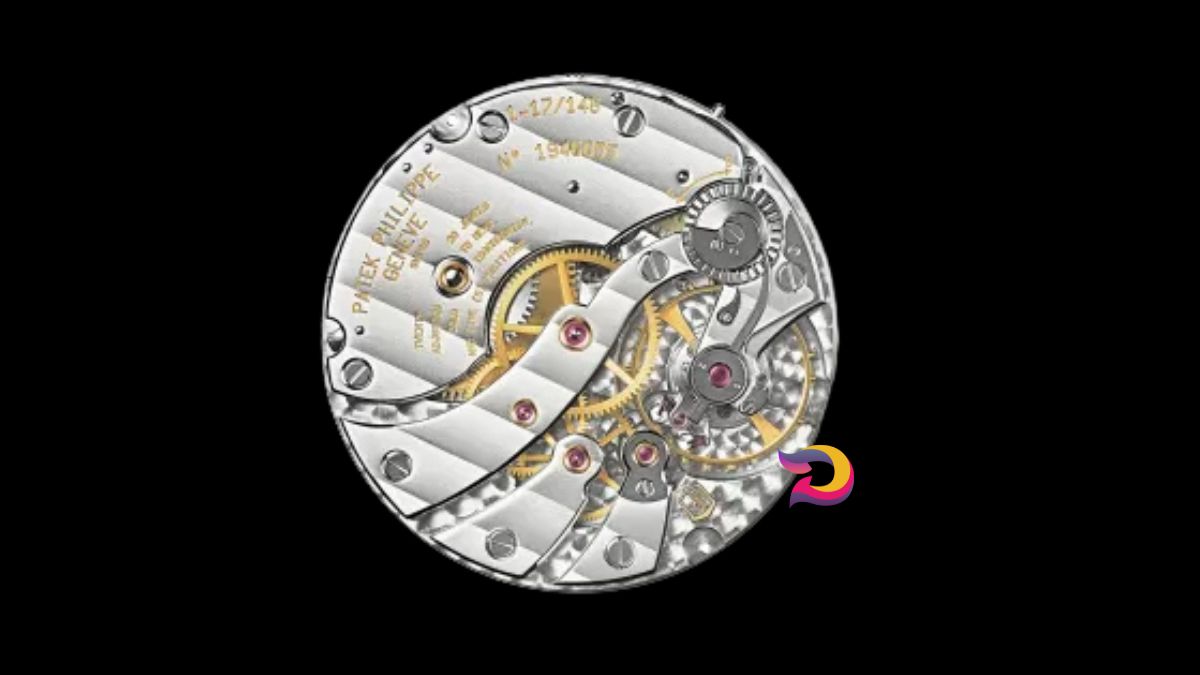
When exploring the rich tapestry of traditional haute horlogerie, few names carry as much weight as Patek Philippe—a manufacture renowned for its uncompromising mechanical mastery and timeless design. Among the lesser-spoken yet profoundly important movements in the company’s historical catalogue is the Caliber 17’’’ LEP PS IRM—a manually wound, precision pocket-watch caliber that embodies the spirit of classical watchmaking.
What the Name Means: A Quick Breakdown
The nomenclature of vintage Patek Philippe movements is surprisingly descriptive once you understand the abbreviations:
- 17’’’ — Refers to the movement’s size: 17 lignes (each ~2.255 mm), translating to a diameter of 38.65 mm.
- LEP — Short for Lépine, the classic style of pocket-watch layout with the winding stem at 12 o’clock.
- PS — Petite Seconde (small seconds subdial).
- IRM — Indication de Réserve de Marche — power-reserve indication.
Put together, Caliber 17’’’ LEP PS IRM is a manually wound Lépine caliber with small seconds and power-reserve display—a traditional yet refined mechanical movement rooted in classic pocket-watch design.
Technical Specifications
Here’s a quick reference table to the key technical details of Caliber 17’’’ LEP PS IRM:
| Specification | Detail |
|---|---|
| Type | Manually wound (mechanical) |
| Diameter | 38.65 mm |
| Thickness | ~3.80 mm |
| Parts | ~158 components |
| Jewels | 20 jewels |
| Frequency | 18,000 semi-oscillations/hour (2.5 Hz) |
| Power Reserve | Minimum 36 hours |
| Functions | Hours, minutes, small seconds, power-reserve indicator |
| Balance Spring | Breguet |
| Seal | Patek Philippe Seal |
This movement is mechanically simple but refined: it emphasizes reliability, classical proportions, and the timeless appeal of a hand-wound mechanism with practical power-reserve indication—an advanced feature for its era.
Mechanical Architecture & Design
Caliber 17’’’ LEP PS IRM showcases traditional watchmaking principles:
1. Lépine Layout
The Lépine format places the crown at the top (12 o’clock on the dial), harking back to the original pocket-watch orientation. This gives a clean, balanced look and was historically the dominant configuration before wristwatches became widespread.
2. Power-Reserve Indicator
The IRM complication adds practical utility: showing how much of the ~36-hour reserve remains. Unlike many simple time-only calibers, this complication signals the winding status at a glance—especially relevant for daily manual winding.
3. Small Seconds Subdial
Positioned at the traditional 6 o’clock location on the dial, the subsidiary seconds adds both visual interest and functional clarity.
4. Patek Philippe Finishing
Though vintage Caliber 17’’’ series movements aren’t haute horlogerie showstoppers like modern calibers, they still uphold Patek Philippe’s rigorous standards of finishing and mechanical integrity, validated by the Patek Philippe Seal—a hallmark of high standards in precision and craftsmanship.
Historical Context & Use
Caliber 17’’’ LEP PS IRM was primarily found in high-end Patek Philippe pocket watches produced in the late 20th and early 21st centuries. These watches weren’t mass market but designed for serious collectors and traditionalists who appreciate classical mechanics over modern wristwatch ubiquity.
Examples of Patek pocket watches using this movement include several Lépine-style gold references, each often featuring intricate dials and precious metal cases—many of which are now coveted in auctions and boutique collections.
Performance, Service & Collector Value
Performance
- Accuracy: Traditional balance and Breguet spring help stable rate performance—typical for lower-frequency pocket calibers where torque and consistency outweigh high beat rates.
- Power Reserve: About 36 hours, enough for daily use with regular winding.
Serviceability
Given its mechanical simplicity (in horological terms) and manual winding architecture, servicing Caliber 17’’’ LEP PS IRM is generally straightforward for experienced watchmakers familiar with vintage Patek movements.
Collectibility
These movements rarely appear in mainstream discussions focused on modern wristwatch calibers, but among vintage pocket-watch enthusiasts, they are appreciated for their classical design, exceptional finishing, and understated complications. Their presence in precious metal pocket watches further enhances desirability.
Why It Matters
The Patek Philippe Caliber 17’’’ LEP PS IRM is a stellar example of how traditional watchmaking remains relevant—even in an age dominated by wristwatches and electronics. It bridges centuries of hand-crafted movement design with practical indications, representing the peak of a mechanical era where pocket watches were both tools and heirlooms.
In a world where horological craftsmanship is often measured in technical feats, Caliber 17’’’ LEP PS IRM reminds us that simplicity polished with perfection is its own form of high art.
Related posts

Inside the Patek Philippe Celestial 6105G
Among the many remarkable releases unvei...

Zenith Release G.F.J. Calibre 135 Double Signed with Naoya Hida & Co.
One of the most significant aspects of Z...

爱彼联手Yoon、Verbal创作38.5mm皇家橡树概念时计限量款/AP Royal Oak Concept
爱彼Audemars Piguet携手时尚品牌AMBUSH创办人Yoon与Ver...

New Release: The Audemars Piguet X Swatch Royal Pop Aims To Capitalize On Hype Culture
When rumors first began circulating abou...

New Release: Patek Philippe Celebrates 50 Years of the Nautilus With Four Limited -Edition Watches
Fifty years is a long time for any desig...

New Release: Cartier Santos-Dumont Watches In Yellow Gold and Platinum
In 1904, Louis Cartier created a watch f...

New Release: The Rolex Oyster Perpetual Jubilee Dial Watches Revive A Favorite 1970s Design
Among its Watches and Wonders Geneva 202...

New Release: The Rolex Oyster Perpetual 41 ‘Oyster 100’ Ref. 13403 Tastefully Celebrates A Century Of Oysters
Watches and Wonders Geneva 2026 has arri...

New Release: Rolesium Rolex Daytona 126502 With Enamel Dial
Under a new “Exceptional Creations” umbr...

New Release: Rolex Yacht-Master II Watch Returns
After its quiet discontinuation in 2024,...

New Release: Rolex Datejust 41 White Rolesor Green Lacquer Ombre Dial Watch
The Rolex Datejust celebrates its 81st y...

New Release: Rolex Oyster Perpetual 28 & 34 With Stone Laquer Dials
As part of its Watches and Wonders Genev...