Social

Editorial
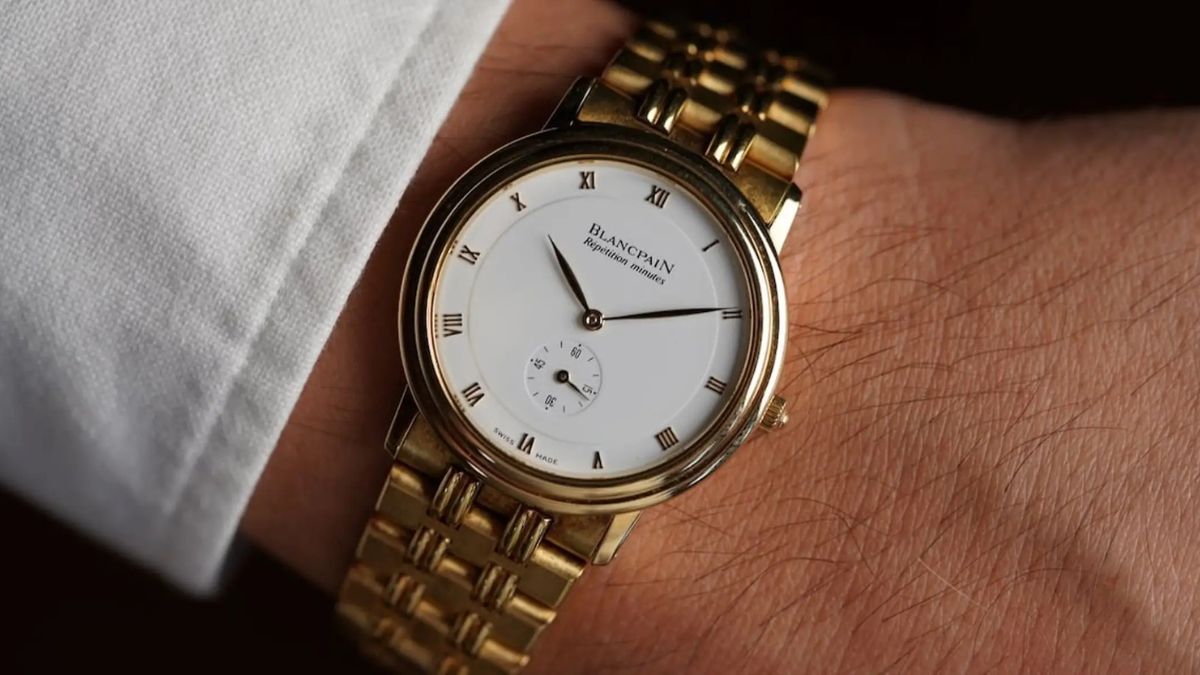
A repeater is one of the most intricate complications a watch can feature. Crafting this mechanism requires the skill of the finest and most experienced watchmakers, as it comprises hundreds of individual components and demands weeks of meticulous manual work. Despite their exceptional value, the delicate workings of a repeater are rarely visible from the outside. Often, the only hint of the complication within is a small lever positioned on the left side of the case.
What is a repeater?
The term “repeater” comes from the Latin word Repetitio, meaning “repetition.” In watchmaking, a repeater complication allows the watch to audibly chime the time when the mechanism is activated. In other words, a repeater movement can sound the hours, quarters, or minutes at a specific moment. The most common types of repeater complications found in watches include:
- Hour repeater
- Quarter repeater
- Half quarter or eighth repeater
- Five-minute repeater
- Minute repeater
The hour and quarter repeater may be familiar from traditional kitchen or grandfather clocks, which chime automatically at each quarter or full hour. In pocket watches and wristwatches, however, the repeater is usually activated manually. Once triggered, it sounds different chime sequences depending on the mechanism’s complexity. The minute repeater represents the pinnacle of watchmaking skill, striking the hours, quarter hours, and minutes in sequence. This complication often takes pride of place in Grand Complications, the crowning masterpieces of haute horology.

Origin of the Repeater Complication
The repeater movement traces its origins to an era when pocket watches and wristwatches were rare. Back then, the sound of church bells marked the passage of time in Western society, effectively serving as the first mechanical “repeaters” in daily life.
From Church Bells to Complications for Luxury Watches
But how did this concept of repetition move from church towers to the wrist? As watch movement technology advanced and timepieces became part of everyday life, the demand for watches with repeater complications grew. The smaller the movement, the more intricate the repeater mechanism becomes, making its construction exceptionally challenging. Only a handful of manufacturers, such as IWC and Patek Philippe, possess the expertise to create them, which makes wristwatches with repeaters relatively rare. Generally, the more precisely a repeater can indicate the time, the scarcer—and more valuable—the watch becomes. Beyond their technical brilliance and status as luxurious masterpieces, repeater watches like the Patek Philippe Grand Complications also represent a sound investment for collectors.

How the Repeater Complication Works
The seemingly simple triggering of the repeater via the slider or lever sets in motion a series of complex mechanisms that are necessary to make the acoustic signal sound. Below we’re explaining in detail what happens inside a wristwatch during a repeating sequence.
The Repeating Process In A Watch
To guarantee sufficient energy for the repeater, an “all or nothing” mechanism is integrated into the striking system. Invented in 1720, it ensures that the repetition only occurs when the slide or lever is fully engaged and the mainspring is wound to its limit. Once this condition is met, the striking sequence begins, determined by the so-called rakes—cogwheel-like segments that read the current time from the relays. The relays are cam wheels that record the positions of the dial hands. In the most complex repeater, the minute repeater, there are three such cam wheels, each no thicker than a human hair. For example, at 3 o’clock, a bar of the rake aligns with the third position of the relay. Releasing the lever allows the spring to return the rake to its original position, striking the tiny hammers, which in turn hit the gong to produce sound. The tone springs themselves require painstaking work: they must be carefully attached to the movement and tuned using fine files, often removing microscopic amounts of material, until the tone is perfect. The spring’s tension, material, and alloy all affect the quality of the chime. If the sound is unsatisfactory, the entire repeater must be disassembled and adjusted. The immense skill and time required make repeater watches rare, highly valuable, and true masterpieces of haute horlogerie.

How Do You “Read” A Repeater?
The care and expertise invested by watchmakers in creating a repeater are reflected in its distinctive chimes. Different pitches or sequences signal the hours, quarter hours, and minutes. The most common is the three-quarter strike, where the quarter hour is sounded and the full hour is marked by a differently tuned strike. The petite sonnerie chimes the quarter hours twice, while the full hours are indicated with a higher or lower tone. A grande sonnerie, by contrast, can audibly indicate hours, quarter hours, and minutes with separate pitches. To illustrate how this works in practice, consider a specific moment in time: when Neil Armstrong first walked on the Moon at 3:56 AM Central European Time. Activating the repeater then, the watch would sound three strikes for the hours, followed by three double strikes for the quarter hours, and conclude with eleven higher-pitched strikes for the minutes. This precise sequence allows the wearer to “hear” the exact time, showcasing the repeater’s remarkable combination of technical mastery and musicality.
Related posts

Inside the Patek Philippe Celestial 6105G
Among the many remarkable releases unvei...

Zenith Release G.F.J. Calibre 135 Double Signed with Naoya Hida & Co.
One of the most significant aspects of Z...

爱彼联手Yoon、Verbal创作38.5mm皇家橡树概念时计限量款/AP Royal Oak Concept
爱彼Audemars Piguet携手时尚品牌AMBUSH创办人Yoon与Ver...

New Release: The Audemars Piguet X Swatch Royal Pop Aims To Capitalize On Hype Culture
When rumors first began circulating abou...

New Release: Patek Philippe Celebrates 50 Years of the Nautilus With Four Limited -Edition Watches
Fifty years is a long time for any desig...

New Release: Cartier Santos-Dumont Watches In Yellow Gold and Platinum
In 1904, Louis Cartier created a watch f...

New Release: The Rolex Oyster Perpetual Jubilee Dial Watches Revive A Favorite 1970s Design
Among its Watches and Wonders Geneva 202...

New Release: The Rolex Oyster Perpetual 41 ‘Oyster 100’ Ref. 13403 Tastefully Celebrates A Century Of Oysters
Watches and Wonders Geneva 2026 has arri...

New Release: Rolesium Rolex Daytona 126502 With Enamel Dial
Under a new “Exceptional Creations” umbr...

New Release: Rolex Yacht-Master II Watch Returns
After its quiet discontinuation in 2024,...

New Release: Rolex Datejust 41 White Rolesor Green Lacquer Ombre Dial Watch
The Rolex Datejust celebrates its 81st y...

New Release: Rolex Oyster Perpetual 28 & 34 With Stone Laquer Dials
As part of its Watches and Wonders Genev...