Social

Editorial
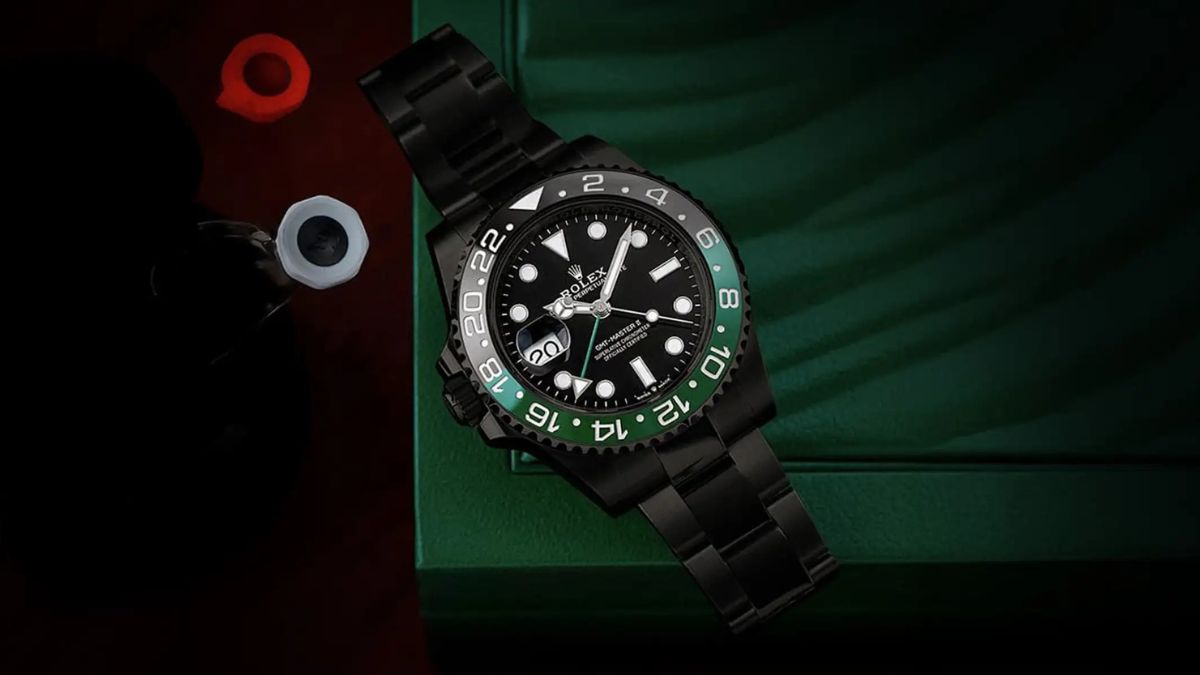
As a left-hander, you’re constantly navigating a world built for right-handed people. From scissors and computer mice to everyday tools, the bias is everywhere—and wristwatches are no exception. Traditionally, a watch is worn on the non-dominant wrist, usually the left. Since most people are right-handed, watch designs have long followed that convention, with crowns positioned at 3 o’clock for easy adjustment.
For left-handers, however, there’s an elegant solution: watches with a crown at 9 o’clock, often referred to as left-handed or “Destro” models. Designed to be worn comfortably on the right wrist, these watches place the crown out of the way, preventing it from digging into the hand while offering more natural operation.
In this guide, we’ll explain what really matters when choosing a left-handed watch, highlight notable Destro models worth knowing, and explore the price ranges you can expect—from accessible everyday pieces to high-end luxury creations. Whether you’re seeking comfort, practicality, or distinctive design, left-handed watches offer a purpose-built alternative that finally puts lefties first.
Do you wear a wristwatch on the left or right?
On which wrist do you wear your watch—left or right? Traditionally, the answer is the left. This convention exists because most people are right-handed. By wearing a watch on the non-dominant left wrist, it’s less likely to be knocked or damaged during daily activities, making it both a practical and sensible choice.
Why not just wear it on the right?
Around 10.6% of the population is left-handed, and many lefties naturally wear their watch on the right wrist. In most cases, this works perfectly well. The annoyance begins when the crown and pushers are positioned on the “wrong” side, compromising comfort and making the watch awkward to operate.

What makes a watch the right choice for left-handers?
The key difference lies in the placement of the crown and pushers. On left-handed models, these elements are positioned on the left side of the case, allowing comfortable operation when the watch is worn on the right wrist. Some watches are purpose-built or fully “mirrored” for left-handers, while others are custom-made adaptations. What’s important to note is that a left-side crown doesn’t automatically mean the watch was originally designed for left-handed wearers—sometimes, its placement is simply the result of technical requirements.
The History of Left-handed Watches
When wristwatches gained popularity in the mid-20th century, standard left-handed models were virtually nonexistent. Watchmakers typically crafted these pieces to order. A famous example is Charlie Chaplin’s customized Rolex Oyster, converted into a “Destro” watch, which later sold at auction for a significant sum.
What does “Destro” mean?
“Destro” is Italian for “right” and refers to watches designed to be worn on the right wrist. In some cases, Destro models weren’t created specifically for left-handers but for design or technical reasons. For instance, the famous Calibre 11 introduced in 1969 required the crown to be placed on the left, as the movement wouldn’t have allowed a chronograph otherwise. A classic example is the Tag Heuer Monaco, featuring a left-side crown and chronograph pushers on the right, making it instantly recognizable and iconic.
Top Models for Left-handers
Check out our selection of remarkable models that were actually built for left-handers:
- Rolex GMT-Master II ref. 126720VTNR (2022): 40 mm, crown and date window on the left, COSC-certified automatic movement, 100 meters (10 bar, 328 feet) of water resistance. Available on an Oyster or Jubilee bracelet.
- Tudor Pelagos ref. 25610TNL: titanium case, chronometer-certified caliber, 500 meters (50 bar, 1,640 feet) of water resistance, date, and left-sided crown – a modern Destro.
- Panerai Luminor Destro PAM 22: Classic 44 mm Panerai with a striking design and 300 meters (30 bar, 984 feet) of water resistance; ideal on the right wrist due to its size.

- IWC Big Pilot “Right-Hander” IW501012: Limited edition pilot’s watch (250 pieces), redesigned dial layout with a power reserve at 9 o’clock, small seconds at 3 o’clock, and date at 6 o’clock.
- Sinn specialty watches: The brand offers several left-handed models, such as rally chronographs (ref. 917 GR), diving watches like the UX SDR GSG 9 (EZM 2B), and mission timers (EZM 3F).
- Jaeger-LeCoultre Master Compressor Extreme World Chronograph Inversor ref. Q17684G7: Haute horlogerie version limited to 200 pieces with a left-sided crown and numerous complications (world time, chronograph, power reserve, pointer date).
How much does a wristwatch for left-handers cost?
Left-handed watches are generally neither more expensive nor significantly cheaper than standard models. Two opposing factors come into play: their rarity could push prices higher, but low demand often keeps them in check. On the second-hand market, well-preserved Destro watches typically sell for prices similar to their right-handed equivalents—they’re simply much harder to come by.
Final Thoughts
For left-handers, a Destro watch is worth considering if comfort and ease of use are priorities. Today, many leading brands offer left-sided crowns across a range of timepieces—from rugged tool watches to high-end haute horlogerie. Prices don’t differ significantly; factors like brand, model, condition, and rarity continue to determine value.
Related posts
Inside the Patek Philippe Celestial 6105G
Among the many remarkable releases unvei...
Zenith Release G.F.J. Calibre 135 Double Signed with Naoya Hida & Co.
One of the most significant aspects of Z...
爱彼联手Yoon、Verbal创作38.5mm皇家橡树概念时计限量款/AP Royal Oak Concept
爱彼Audemars Piguet携手时尚品牌AMBUSH创办人Yoon与Ver...
New Release: The Audemars Piguet X Swatch Royal Pop Aims To Capitalize On Hype Culture
When rumors first began circulating abou...
New Release: Patek Philippe Celebrates 50 Years of the Nautilus With Four Limited -Edition Watches
Fifty years is a long time for any desig...
New Release: Cartier Santos-Dumont Watches In Yellow Gold and Platinum
In 1904, Louis Cartier created a watch f...
New Release: The Rolex Oyster Perpetual Jubilee Dial Watches Revive A Favorite 1970s Design
Among its Watches and Wonders Geneva 202...
New Release: The Rolex Oyster Perpetual 41 ‘Oyster 100’ Ref. 13403 Tastefully Celebrates A Century Of Oysters
Watches and Wonders Geneva 2026 has arri...

New Release: Rolesium Rolex Daytona 126502 With Enamel Dial
Under a new “Exceptional Creations” umbr...
New Release: Rolex Yacht-Master II Watch Returns
After its quiet discontinuation in 2024,...

New Release: Rolex Datejust 41 White Rolesor Green Lacquer Ombre Dial Watch
The Rolex Datejust celebrates its 81st y...
New Release: Rolex Oyster Perpetual 28 & 34 With Stone Laquer Dials
As part of its Watches and Wonders Genev...